
Ehsan Naraghi
Biography
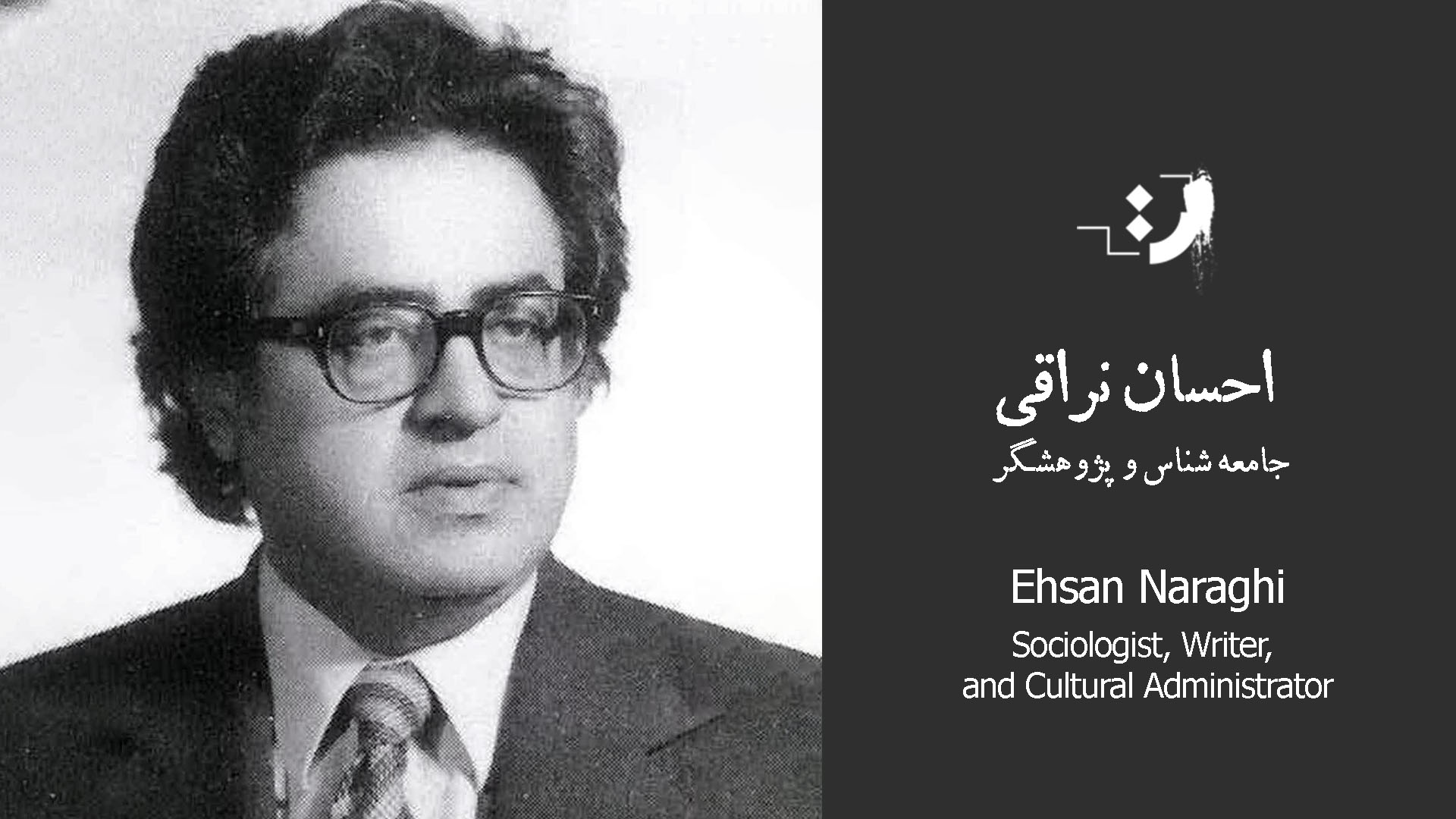
Ehsan Naraghi (September 13, 1926 – December 2, 2012) was an eminent Iranian sociologist, writer, and cultural administrator. Widely recognized as a pioneer of academic sociology in Iran, he was the first and only Iranian to hold the position of Director of the Youth Division at UNESCO. Throughout his career, Naraghi bridged the gap between academic research and public policy, leaving a significant footprint on both Iranian academia and international development studies.
Ancestry and Personal Life
Born in Kashan to a family of prominent Shiite clerics, Naraghi was a direct descendant of Mulla Mahdi Fadhil Naraqi, the author of the celebrated ethical treatise Jami’ al-Sa’adat. His father, Hassan Naraghi, was a scholar who eventually left the clergy in 1935. Through his mother, Rakhshandeh Gohar Moshiri, Naraghi was related to Ayatollah Sayyid Abol-Ghasem Kashani, a connection that positioned him as an informal liaison between Kashani and Prime Minister Mohammad Mossadegh during the oil nationalization movement. In 1959, he married Angel Arab-Sheibani, descended from a prominent family in Shiraz, with whom he had three sons: Bahman, Bahram, and Amin.
Educational Background
Naraghi completed his primary and secondary education in Kashan and at the historic Dar ol-Fonoon school in Tehran. He initially spent two years studying law at the University of Tehran before moving to Switzerland. He earned his bachelor’s degree in sociology from the University of Geneva and subsequently moved to France, where he obtained his doctorate in sociology from the Sorbonne University in Paris.
Pre-Revolutionary Academic and Public Career
Upon his return to Iran in 1952, Naraghi joined the faculty of the University of Tehran with the support of Dr. Gholamhossein Sadighi. Together with Sadighi and Dr. Ali-Akbar Siyasi, he co-founded the “Institute for Social Studies and Research,” directing it for 12 years. Under his leadership, the institute contributed significantly to urban planning projects for major Iranian cities like Tehran and Shiraz and published seminal social science texts.
Due to his family connection to Empress Farah Pahlavi, he served as her advisor and, during the turbulent final months of the Pahlavi regime, held eight private audiences with Mohammad Reza Shah to counsel him on societal grievances and necessary constitutional reforms. His major offices prior to 1979 included:
Director of the Institute for Social Studies and Research at the University of Tehran
Director of the Youth Division at UNESCO (Paris)
President of the Institute for Research and Planning in Science and Education (Iran)
Post-Revolutionary Period and Imprisonment
Following the 1979 Islamic Revolution, Naraghi chose to remain in Iran but was arrested and imprisoned three times. His first arrest in 1979 ended quickly due to the intervention of Ayatollah Morteza Motahhari, who testified to Naraghi’s intellectual and political independence. His second arrest occurred at the airport; during his subsequent four-month detention, revolutionary judges reviewed recorded SAVAK wiretaps of his conversations with the Shah, which proved he had maintained critical independence and had warned the monarch of systemic corruption. He was acquitted and reinstated to his academic post. He was arrested a third time in 1981, spent 15 months in detention, and was eventually exonerated of all political charges. He later resumed his advisory role at UNESCO and traveled freely to Iran in his later years.
Intellectual Legacy and Perspectives
Naraghi’s intellectual outlook was characterized by reformist pragmatism and a rejection of revolutionary methods. He believed that the Pahlavi state possessed the structural capacity for reform, though it lacked the political will to implement it. Internationally, he was a pioneer in studying the “brain drain” phenomenon, preparing the first global report on the topic for the United Nations in 1965. In recognition of his international academic and cultural contributions, he was twice awarded France’s prestigious Légion d’honneur by Presidents Charles de Gaulle and François Mitterrand. Naraghi passed away in Tehran on December 2, 2012.
Selected Works and Publications
Des palais du Shah aux prisons de la révolution (From Palace to Prison: Inside the Iranian Revolution, Balland, 1991 / I.B. Tauris, 1997)
Enseignement et changements sociaux en Iran du VIIe au XXe siècle (Les Éditions de la MSH, 1995)
L’exode des compétences: Un obstacle majeur au développement (Brain Drain: A Major Obstacle to Development, Politique étrangère, 1967)
Les Classes Moyennes en Iran (Cahiers Internationaux de Sociologie, 1957)
Sociology and Society in Iran (Revue Française de Sociologie, 1967)
The Cultural Identity of Iran and the Contemporary World (The New Review of Two Worlds, 1976)
Unesco, youth and the regeneration of education (Prospects, 1972)
- Birthday: September 13, 1926
- Death: December 2, 2012
- Birthplace: Kashan, Isfahan, Iran
Sociologist, Writer, and Cultural Administrator